

“What are the spacings for planting gladioli corms?” asked Becky, one of our new, young (well, a lot younger than me!) allotmenteers.
“6 inches deep, 6 inches apart and a foot between rows” was my helpful response.
“Ah” she said, “that will be 15 centimetres, 15 centimetres and 30 centimetres.”
This little incident set me thinking about the weird, wonderful and sometimes bizarre world of weights and measures. I can visualise 6 inches but I cannot get a picture in my head of 15 centimetres. Strange, eh?
According to the National Allotment Society, an allotment is traditionally measured in rods (perches or poles), an old measurement dating back to Anglo-Saxon times. 10 poles is the accepted size of an allotment, the equivalent of 299 square yards or about the size of a doubles tennis court. There’s something to drop into the conversation if it goes quiet in the snug one evening!
When I bought my first car in the late 60s (for the record, a 1958 Standard 10, VAX 538), and topped up with petrol at the garage (I think they were all referred to as garages then – filling stations came along later), the pumps dispensed it in gallons

These days, of course, it is litres. Perhaps this is just as well, as a gallon would now cost over £6, more than my first week’s wage.
In 1954, when Roger Bannister made athletics history by running the classic middle-distance race in 3 minutes 59.4 seconds, it achieved world-wide fame as the first sub-4-minute mile, not the first sub-4-minute 1,609 metres. There is something majestic and awe inspiring about the mile – 1,609 metres just doesn’t cut the mustard.
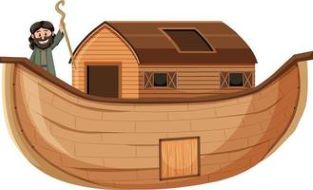
Some archaic measurements are still in use but some are not. The universal length of a cricket pitch is the obscure chain – 22 yards. Many horse races are measured in furlongs, the equivalent of 220 yards. In Genesis Chapter 6, God instructed Noah to build the ark 300 cubits long, 50 cubits wide and 30 cubits high. A cubit was deemed to be the length of the forearm from the elbow to the tip of the middle finger, about 18 inches. The ark must have been very, very cramped.
This is a really odd one – the UK standard railway gauge is 4 feet 8½ inches. Why didn’t the early railway engineers just go for a round number, say, 4 feet 6 inches, or a straightforward 5 feet?
We do tend to mix and match our weights and measures. The strong wholemeal bread flour I use comes in 1.5 kilo bags but when we go to the greengrocer, we buy onions by the pound. Very curious.
Should Becky seek advice on how much fertiliser to put around each of her strawberry plants there will be no exact nonsense such as 1 ounce per square foot – oh no – the answer will be that wonderfully imprecise gardeners’ measure “a slack handful.”

Thanks to Charlieaja for the free opening image featured on Dreamstime.com
Tags: centimetres, gallons, inches, litres, standard